Magical Protections For Warfare and Life

Many, if not all societies have had supernatural belief systems, which provide individuals with existential meaning and a sense of purpose. Many of these beliefs are probably incorrect, but believe it or not, the belief in protection from spells during warfare, though often detrimental to the individual, is generally beneficial to society as a whole, bringing groups together and helping them to survive.

Magical Warfare Technologies


Since the 1990s, the Democratic Republic of the Congo has experienced extreme levels of violence and political turmoil. High levels of displacement, disease and poverty exist here. There is also little in the way of governmental support or direction to provide help. This leaves the people of the Congo in a precarious position with high levels of existential angst. This is where supernatural beliefs come in. 

The Congolese, in general, have a high level of belief in the supernatural. They believe that unseen forces and agents inhabit the world. An example of this is the magical ritual of bulletproofing, 
The Mai-Mai guerrillas of the Congo would charge into battle naked with the belief that they were bulletproof. Such beliefs are not that unusual. A former commander of forces and member of the Sarpo tribe in Liberia, who was often referred to by the name, General Butt Naked, would lead his troops into battle, naked, except for shoes and a gun. He believed the nakedness was a source of protection from bullets. He also believed in increasing his powers by cannibalism, until he converted to Christianity. 

The rituals to make a person bulletproof vary, ranging from not drinking water, no sexual acts with a woman during her period and not eating zucchinis. Failure of the bulletproofing, such as death, would often be attributed to the failure to carry out the conditions of the ritual. Death and injury did not prove the belief system to be false.

Magical Tattoos


In Thailand, the tradition of sak yant tattooing goes back thousands of years. These yantra tattoos are believed to be magic and to bestow mystical powers, protection, or good luck. Of note, “Sak” means “tattoo,” and “yant” comes from yantra, a mystical diagram found throughout Dharmic religions.

People receiving these sacred tattoos believe that the drawings on their skin are magically charged and will bring many benefits. There is a range of protections and benefits which are believed to be provided by the tattoos, from protection to the bearer, attracting romantic partners and shielding the wearer from bullets and other weapons. 
Tattooing Yant at Wat Bang Phra Temple
The designs of the sak yant tattoos are derived from Buddhist and animist imagery, but each person receives tattoos that are suitable for his/her purposes and place in the world. Celebrities like Angelina Jolie and Steven Seagal and other foreigners have had sak yant tattoos inked upon their skins and this has upset the Thai people and led to the installation of 15-metre-wide billboards near Bangkok's Suvarnabhumi Airport declaring that: "It's wrong to use Buddha as a decoration or tattoo".

Tribal Cannibalism and Tradition


Throughout the Pacific region, there has been a culture and tradition of tribal warfare for hundreds and sometimes, thousands of years. Although many of these preindustrial societies had institutions which were aimed at taming violence, such as the use of duels, enforced migration and compensation; as circumstances changed and populations grew, these often failed. In more recent years, Western justice systems have tried to stop the cycles of violence and revenge, called "payback" in pidgin English, by bringing fighting and the dispensation of justice into the courtroom. 

Back in the 1970s, Papua New Guinea was an Australian‐administered territory. However, at this time, there were still many "undiscovered" and uncontacted tribes living in New Guinea, particularly in the Highlands region. Some of these tribes were found to be eating the bodies of their enemies and keeping the mummified remains of their own dead tied to tree platforms in a sitting position. Other tribes would display skulls won in battle.
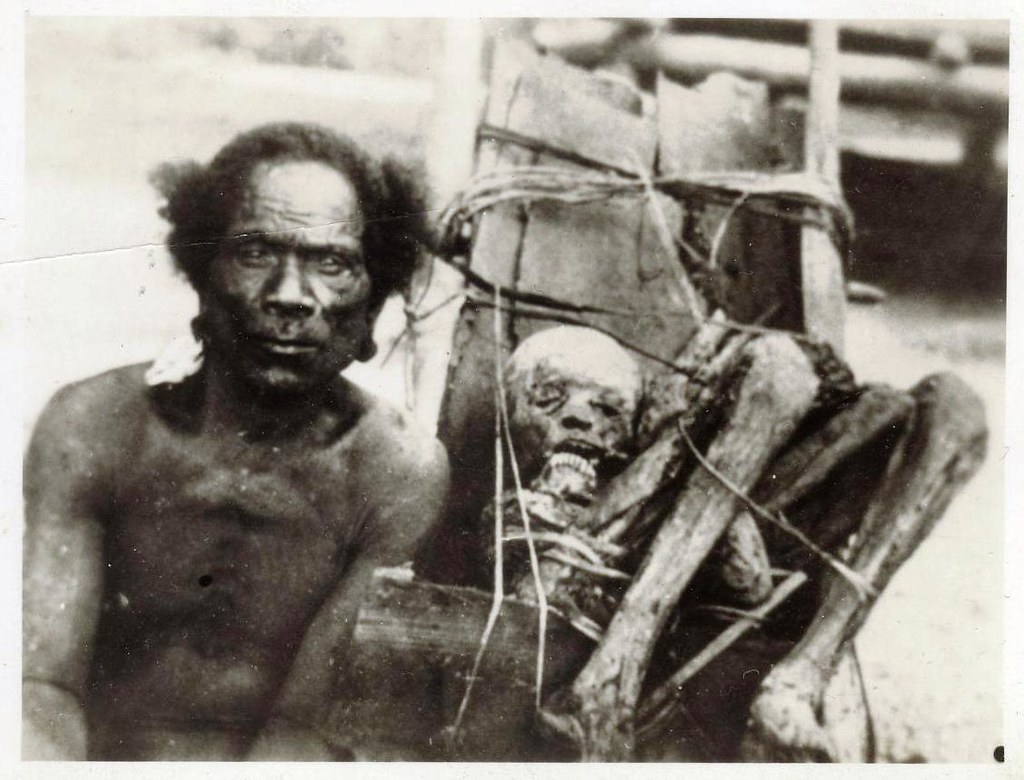
New Guinea native posing with a mummified body - WW2 era
New Guinea native posing with a mummified body - WW2 era. Aussie Mobs
Some tribes practised cannibalism, so that they could obtain a witch's powers and prevent these powers from being used by others.  Some routinely cut off the heads of the rivals tribe and poured the blood over a special stone, then later drank brain soup. This was just part of the everyday tribal warfare. 

Books To Read

Why People Believe Weird Things: Pseudoscience, Superstition, and Other Confusions of Our Time, by science writer Michael Shermer.

Plants Communicate and Feel Pain


It appears from research that plants have intelligence, as they can solve problems and learn from experience. In the book, The Hidden Life of Trees: What they Feel, How they Communicate—Discoveries from a Secret World, by Peter Wohlleben, these claims are supported by authoritative scientific publications.

Trees, it seems, are not isolated individuals. They actually live in communities with complex ecological relationships. These relationships are with organisms of the same species and with organisms of different species, and especially, with the soil fungi, which assist in the transmission of nutrients to plant roots.

Trees of the same species are almost tribal, but they will form alliances with trees of other species to communicate collaboratively through a network, which some have called, the Wood Wide Web. Through this network, trees send chemical, hormonal and slow-pulsing electrical signals, which scientists are just beginning to understand.

According to Jack C Schultz, a professor in the Division of Plant Sciences at the University of Missouri in Columbia, plants "are just very slow animals." He also says that plants move with purpose. They hunt for food, compete for territory, circumvent predators and some even trap prey.
Tree canopies often stop expanding when they touch the canopies of the trees around them, this is because of “Canopy shyness”. However, some trees only do this with trees from the same species. The Australian botanist, Maxwell Ralph Jacobs, noticed canopy shyness in eucalyptus in the 1950s. It seems that such trees are collaborating, so that all the tree canopies can receive light.

Some decades ago, scientists noticed on the African savannah, that giraffes would move on minutes after feeding on umbrella thorn acacias. These acacias, in response to the nibbling of the giraffes, would produce a toxic substance (ethylene) in their leaves. These trees would also send airborne scents to signal other trees in the vicinity, which would also begin to produce the toxic substance to deter the giraffes from eating their leaves.
Also, according to Peter Wohlleben, beeches, spruce, and oaks all register pain as soon as some creature starts nibbling on them. When a caterpillar takes a bite out of a leaf, the tissue around the site of the damage changes. In addition, the leaf tissue sends out electrical signals, just as human tissue does when hurt. However, the signal is not transmitted in milliseconds, as human signals are; instead, the plant signal travels at the slow speed of a third of an inch per minute.

Trees in cities are often stressed and have much shorter lives. Many experience sleep deprivation, with the constant light sources they experience. According to Daniel Chamovitz of Tel Aviv University in Israel, many plants have other similarities to humans, too, in the way plants experience the world. For example, they can distinguish between light of different colours and they are aware of aromas and of gravity and can sense which way is up or down.

Plants are much more complex than we humans have previously thought, which means that we may need to rethink our treatment and relationships with them. 

We Absorb Our Family Story

A few years ago, Alice Collins Plebuch decided to take one of those DNA tests which show your ancestry. She had always believed herself to be of Irish descent and her family fully identified as Irish-American Catholics, so she was disturbed and flummoxed when half of her DNA came back as being European Jewish, Middle Eastern and Eastern European. (read here).

And so, Alice began a journey to find out the real story of one-half of her origins.

As it turned out, to make a long story short, Alice's father Jim Collins, who had always been very religious and regarded himself as being an Irish-American, and who'd even had a Irish-style wake when he died, had been mistakenly given after his birth, to the Irish-American couple that he grew up to regard as his parents. His real parents were actually Ashkenazi Jewish-Americans. The Irish couple's own child had been given to the Jewish family and this child had been named, Phillip Benson.

Phillip Benson, like Alice's father, was born at Fordham Hospital in the Bronx and he had been brought up and married into the Jewish community. Someone it seems, mixed the children up and as the Washington Post stated, “Somehow, a Jewish child had gone home with an Irish family, and an Irish child had gone home with a Jewish family and the child who was supposed to be Philip Benson had instead become Jim Collins.”

Which just goes to show how most of us simply take on and adsorb the beliefs of our immediate family and surrounding culture, despite the origins of our DNA. 

The Parliament of Our Brain and Free Will

According to the work of neuroscience, our sense of self is simply an illusion. A trick of the brain. Whilst many of us believe we have a single integrated identity and free will, in reality, our brain is creating this hallucination.

Our brains, according to David Eagleman, a neuroscientist at the Baylor College of Medicine in Texas, are more like a "neural parliament", with different parts of the brain fighting it out in an attempt to control decisions.

Our sense of reality is constructed by the brain, by many unconscious processes and our sense of who we are is based on a story we tell ourselves, based on distorted and selective past memories.

Brains are locked inside the darkness of our skull and they depend on the information streamed by our senses. The brain then makes patterns and creates a picture of reality. But our response to this reality may not be simple. For example, I might see a delicious cheesecake in front of me and the parts of my brain which register hunger and pleasure might want it. Another part of my brain might be thinking about how I need to lose weight and that the ingredients in the cheesecake might not be good for my health. If I'm feeling particularly hungry or stressed, then the hypothalamus, an area of the brain in charge of the stress response and hunger may well prove to be dominant over the other parts urging me to control myself.
Consider also how a bottle of hand sanitizer can cause most of us to become more conservative. In general, conservatives have a stronger disgust reaction. According to research in the journal Psychological Science, reminders of cleanliness changes peoples social attitudes. Simply placing a bottle of hand sanitizer next to people answering a questionnaire causes respondents to answer more conservatively.  


Books To Read

The Righteous Mind: Why Good People are Divided by Politics and Religion, is a social psychology book by Jonathan Haidt, in which the author describes human morality as it relates to politics and religion.

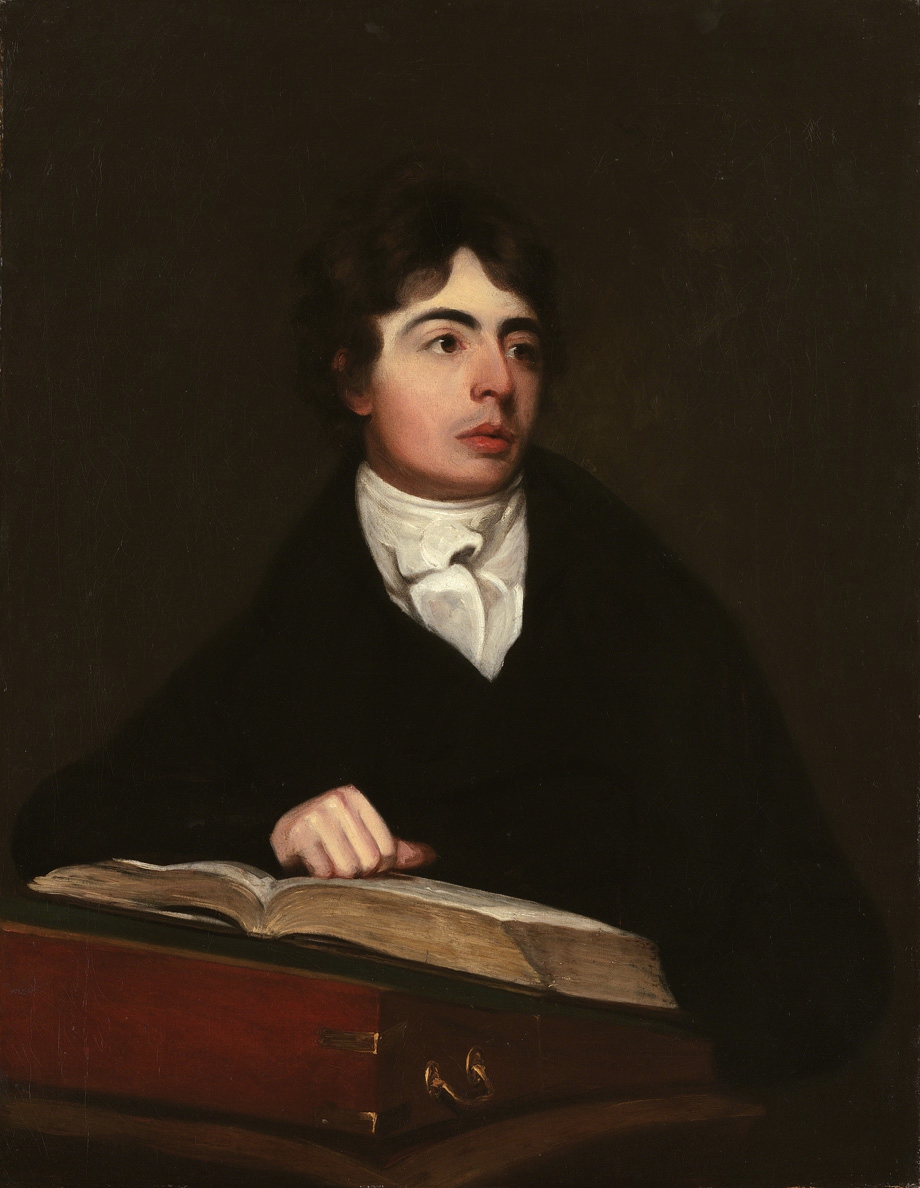
Poetical Egalitarians: Coleridge and Southey

The renown British poets, Samuel Taylor Coleridge and Robert Southey, in 1794, came up with a plan to create a utopian egalitarian community based on two principles: "Pantisocracy" (meaning government by all) and "Aspheterism" (meaning general ownership of property). The foundation of their idea came from from Plato's ideal commonwealth.

In this new society, the two men wanted to eliminate servitude and oppression. Integral to this vision was the precept of no personal property so that people would be governed by the “dictates of rational benevolence.”

Initially, Coleridge and Southey planned to build the community on the banks of the Susquehanna River in the United States; then later, the idea of establishing a less ambitious community in Wales was put forward.

However, as neither Coleridge or Southey had much money with which to build their utopia, they had hopes that wealthier immigrants who would join the community, would be willing to finance it.

Pantisocracy as dreamt of by Coleridge and Southey, never came about, as the plans were scuttled by financial difficulties and the loss of interest in the idea by potential community citizens.
Samuel Taylor Coleridge
Robert Southey

63 Light Years Away: It Rains Glass

The planet called HD 189733b is a beautiful azure blue. But this planet is 63 light years away and the atmosphere is a scorching 1,000C. And it rains glass there.....but, sideways, mind you, because of the 7,000km-per-hour winds. So it's not exactly a relaxing scene, even if you could get there.
This huge gas giant is located 600 trillion kilometres from Earth, but its environment would not be compatible with life, with its extremely hot glass rain and scorching temperatures. So essentially, it's a right deadly place.

Located in the constellation Vulpecula in the northern sky - also known as the little fox, this planet, like Earth, looks blue and for similar reasons. However, while Earth looks blue because the blue spectrum of the Sun's light is scattered about by air molecules, on this planet, the glassy silicate particles scatter the blue light spectrum.

Look Left and Right

Conservatives are often called right-wing and liberals left-wing and these different groups tend to see the world differently and to form political sects which disparage and despise each other. But we would be better served if we got out of our echo chambers and started to listen to each other. Here's why:

As Winston Churchill said, democracy is the worst form of government, except for all the others that have been tried. So if we concede that while the democratic system is a slow-moving beast, it is also a system which allows its citizens to express their opinions about the country and how it is being run. This is the public sphere and the discussion and debate which goes on here should help us to identify potential societal problems, work through issues and come to a workable compromise.

Now, take a contentious and explosive matter like immigration, which for many wealthy and successful western democracies, is a salient and fraught matter. Left-wingers will tend to emphasise issues like human rights and the belief that all lives are equally valuable. These, are undoubtedly important and weighty considerations.

Right-wingers, however, are often concerned by how our society will change with immigration and this is very important too. For example, some ethnic and religious groups may have a lot of children, and so, after a number of years, some particular groups of people may have the numbers and the ability to affect political policy toward certain directions. This may matter or it may not. But we need to listen closely to all voices and not just dismiss those that we see as the opposition.

Also highly relevant here is the importance of free speech in a democracy and the recognition that your right to free speech is always constrained by the rights of others, as other people also have the right not to endure vilification, hate and harm. And genuinely embracing free speech doesn't mean that you only support the concept when the speech happens to coincide with your point of view.
For example, in Australia, the left tends to respond in outrage when limits to immigration may be mentioned, and so, interesting and important arguments about the population carrying capacity of the land and the planet are also shut down. The left often wants to talk about the environment but with critical exclusions. How the changing ethnic and religious make-up of the country may modify what we value about our country, also, shouldn't be shut down and crushed. These matters are important to us all and we should take care not to stymie and stunt the discussion.

Australia's right-wing is also guilty of the same blinkered views and obstructions; like when a certain journalist was sacked after an intensive campaign from the right-wing, who were outraged about his "offensive" comments about Anzac Day. The interesting thing, however, is that many academic historians would agree with that SBS journalist's views, as they fitted the facts and evidence. But Anzac Day has become like a religion on the right in Australia and any criticism is seen as blasphemy. The real historical story is covered up and kept like a simple fairy tale and whilst this feeds the monster of nationalism, it also dumbs us down as a nation.

One other thing to mention is that breaking down the wall of our information and group silos does not mean that we simply become centrists, as this way of thinking is too simple and it's based on the fallacy called argumentum ad temperantiam, where you take the middle ground, or a false compromise. What you need to do is listen to the discussion and learn as much as you can. And each issue should be judged on its merits.

So whilst your right or left wing echo-chamber may be comfortable and reassuring, it is also stunting your brain and destroying democracy.