Hitler Was on Drugs

Adolf Hitler the leader of the Nazi Party from 1933 to 1945, is known for bringing about WW11 and for his genocide of the Jewish people. Hitler, however, in the beginning at least, had a desire to become an artist; his paintings are rather good, and he was a practising vegetarian.
Mother Mary with the Holy Child Jesus Christ, 1913, Adolf Hitler
There are reports that Hitler became a vegetarian because of concerns for animal cruelty. Although he may have been inspired by other reasons too, it is hard to square the idea of Hitler as caring about the abuse of animals, with the murderous dictator that he became. A 1937 article in The New York Times, also noted that Hitler didn't drink or smoke and that he avoided any kind of meat.

Things changed. Hitler went from a person who would try to dissuade others from eating meat by telling them graphic accounts about how animals are killed, to a person who was addicted to drugs, such as amphetamine, barbiturates, opiates, and cocaine and injected animal hormones.

The German writer Norman Ohler reveals the astonishing tale of drug use by Hitler and the Third Reich and how the Nazi armies carried out the "Blitzkrieg" invasions of Poland and France while high on, Pervitin, which was basically crystal meth.

It was Hitler's personal physician, Dr Morell, who would inject Hitler with an opiate drug, which is very close to heroin (now called oxycodone), three times a day and prescribed him high-grade cocaine to be taken twice a day. But the drug producing factories were bombed and the drug supplies began to run out. Whether the drooling, stumbling and crazy acting Hitler was suffering from Parkinson’s disease or in withdrawal, or both, at the war's end, before his suicide, we cannot be certain.

And all this when we thought that the Nazi's couldn't get any more sinister and despicable.


Books To Read

Blitzed: Drugs in Nazi Germany, by Norman Ohler

Free Vegies and Fertilizer

If you are are a frugal and thrifty type you will love the following suggestions:

Grow Bok Choy or Celery from Scraps


If the bok choy in your fridge has some yellowed leaves at the bottom, don't throw it away, because it's ready to grow. First, cut the stems of the vegetable where the stems meet the leaves. Or in other words, 2 inches from the bottom up. Use the good leaves in your cooking.

Take the bottom of the bok choy and put it into a bowl with at least 2cm of water. The part where the leaves used to be should be facing up.

Place the container with the bok choy in direct sunlight and then, simply change the water in the container every day.

After some days roots should appear, and then, you can plant your bok choy in a pot or in the ground. Cover the roots well and water the plant whenever the soil becomes dry.

As the plant grows you can cut leaves from the outside and the plant will continue growing and producing.

Carrot Tops For Salad Greens

Place carrot tops in a bowl with water and put them in a well-lit room. After the green tops grow you can cut them off and use in salad or cooking.

Other vegetables which can be grown from scraps are Cos lettuce and cabbage which can grow roots if the bottom is placed in a bowl of water. After roots appear, plant in a pot or in the ground.

Fertilising with human urine

There is no need to purchase costly fertilizers for your plants as you can use your own urine. And importantly, fresh human urine is sterile and bacteria free. Our urine contains Nitrogen (N), Phosphorous (P), and Potassium (K) and other trace micro-nutrients.

After you collect your urine add some water, about 5 times as much water as urine. Then simply apply the liquid to the soil around the plant.

No more chemical fertilizers!

The Jesus Triumvirate

Milton Rokeach was a social psychologist who published a book in 1964, about the experiment he conducted on a group of three patients with paranoid schizophrenia, at Ypsilanti State Hospital, in Michigan USA.
by Caravaggio
Whilst working at the psychiatric facility, Rokeach found that three male patients, all with paranoid schizophrenia, all believed that they were Jesus Christ. So Rokeach brought the men together, forcing them to confront their conflicting claims.

At first, the three men fought with each other, with one man claiming that, "You oughta worship me" and another countering "I will not worship you!" and the third insisting "....I am the Good Lord".

The three men continued over time to debate, argue and fight, but only one of them slightly capitulated and asked to be called a different name, in this case, "Dr Righteous Idealed Dung".

Despite Rokeach manipulating these patients and their delusions in various ways, in an attempt to get them to change their beliefs, the patients' continued to strongly believe in their delusions. As explanations for the existence of two other people claiming to be Jesus, they variously claimed that the others were "crazy" or "duped"; had a mental disability, were dead and being operated by machines.

At the end of the 1984 edition of the book, Milton Rokeach wrote, "I really had no right, even in the name of science, to play God and interfere round the clock with their daily lives".

Henry Ford's Unhappy Jungle City

Henry Ford is famous for selling millions of cars, especially the affordable Model T produced by assembly line manufacturing. He paid his workers well and he helped create a middle class in America.
Henry Ford on the cover of Time magazine, January 14, 1935
 As a highly successful man of business, Henry Ford's name demands a great deal of respect, but Ford had some crazy ideas too, like creating a prefabricated, industrial town in the Amazon Rainforest, called Fordlândia.

After negotiating a special deal with the Brazilian government in 1928,  Henry Ford began to steam ahead with the creation of the world’s largest rubber plantation, set deep in the Amazon forest.

The motivation behind Henry Ford's Amazon industrial town, was an attempt to undercut Asian rubber growers, who had a monopoly on producing rubber and who drove the prices sky-high. So Ford spent a truckload of money (excuse the pun) and built houses, relocated workers and employed indigenous people to work at Fordlândia. But few of his plans worked out as he hoped.

Ford didn't consult a specialist about growing the rubber trees and most of the trees died from blight Then he spent a heap of money building swimming pools, tennis courts, and shops for his workers, but he soon faced malaria, riots and cultural clashes.

Ford was a control-freak. He expected his workers to work hard, long hours in the relentless jungle heat. And then, he tried to impose a kind of "cultural imperialism" on these workers during their time off. They had to eat at the canteen, which only served bland food, which the workers had to pay for.
Ruins of Fordlândia, circa 2005.
For entertainment, Ford provided English only singing performances and compulsory square dances, at which alcohol was banned. In trying to bend the jungle to his will and forcibly shape his workers free time and culture, Ford was not successful. His rubber plants died and his workers were unhappy and rioted.
The main warehouse at Fordlandia
After losing $20 million on his Amazon venture (over $200 million in today's dollars) Ford sold Fordlândia for $250,000. Today Fordlândia lays crumbling into ruins and deserted in the Amazon jungle.

Frankenstein, Anarchism and Free Love

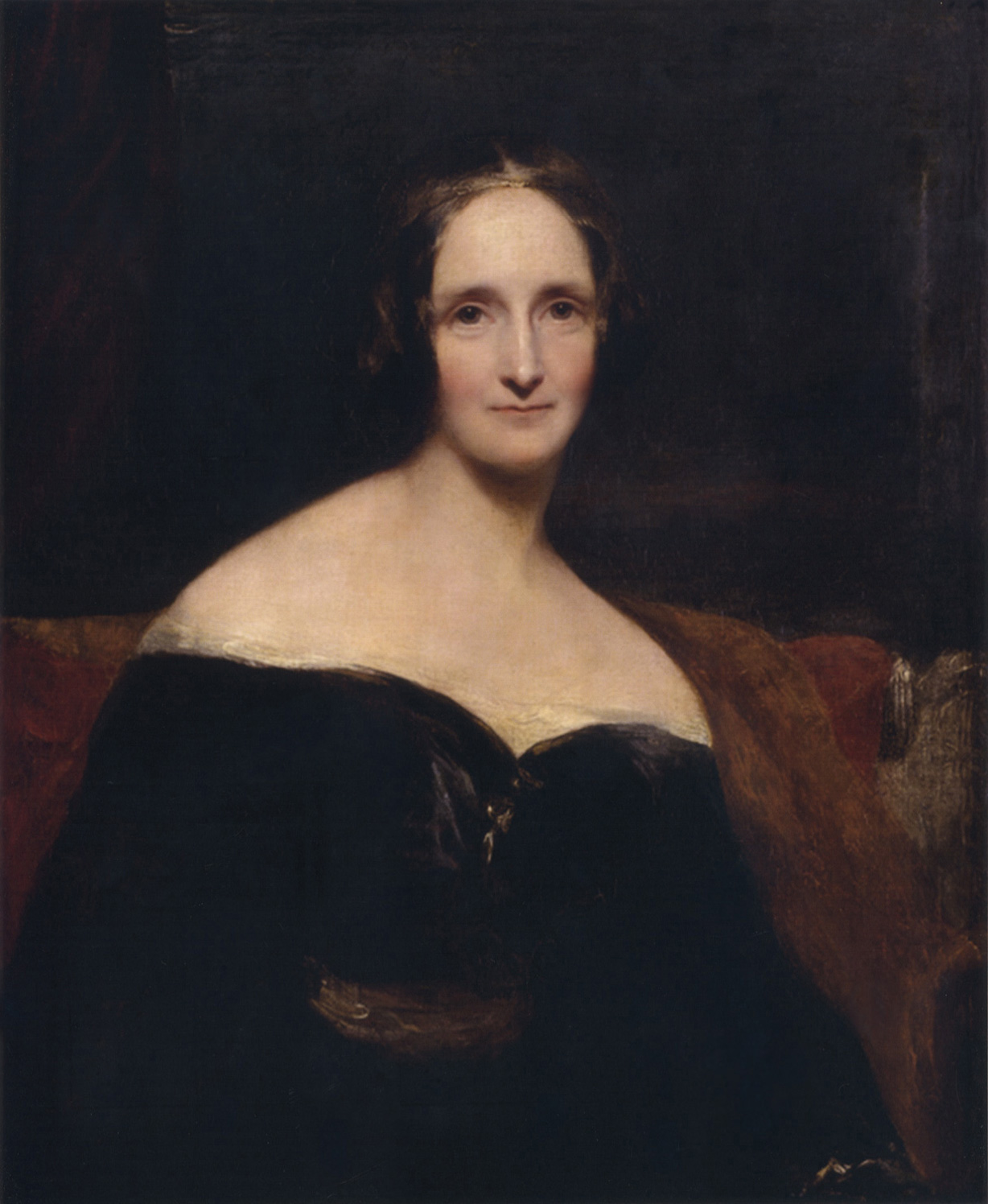
Mary Wollstonecraft Shelley (1797-1851), the author of the gothic, horror novel Frankenstein, or the Modern Prometheus (1818), was the daughter of radical, celebrated and interesting parents.
Mary Shelley
Mary's mother was the philosopher and feminist, Mary Wollstonecraft, who wrote A Vindication of the Rights of Woman (1792). A book which argued that women were not inferior to men; that they only needed educational opportunities.
Mary Wollstonecraft
Wollstonecraft objected to the way that society demanded that girls be brought up, as empty-headed flirts, who were only interested in trivialities; she believed this was morally depraved. She saw women as being trapped by their lack of serious education and training, in a life that was all about appearances.

Mary's mother, also, did not believe in marriage, which was a fairly scandalous notion in 1793, when at age 34, she fell in love with an American named Gilbert Imlay, whom she'd met during the French Revolution. Wollstonecraft became pregnant and gave birth to a girl named, Fanny. However, when the child was 4 months old, Gilbert left on a business trip and never came back.

Sadly, after her death, Wollstonecraft's very important and groundbreaking ideas were overshadowed by her reputation as a fallen woman.
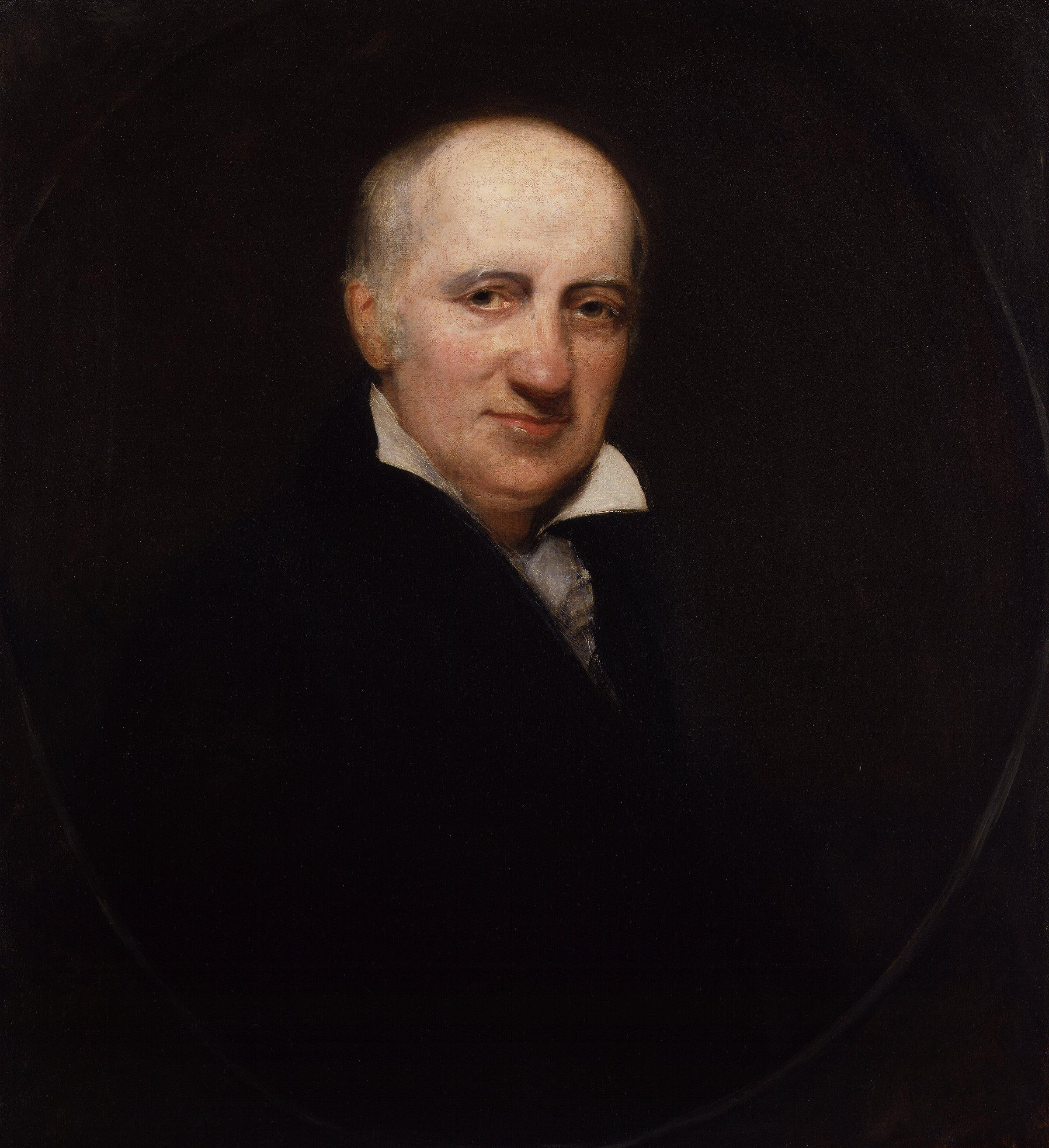
William Godwin
Mary's father was also an important philosopher named William Godwin. He was one of the founders of the still highly relevant philosophy of Utilitarianism and a supporter of Anarchism. Godwin, like Wollstonecraft, believed that marriage was "an affair of property" and an act of tyranny and degradation. Mary's parents, however, did go against their own beliefs, as they did marry, as they did not want to harm the future prospects of their daughter.

Going against their principals went to waste for Mary's parents, as later, while still a teenager, Mary eloped with the already married Romantic poet and philosopher, Percy Bysshe Shelley. But she did marry Shelley and she went on to write the hugely important and thought-provoking novel, Frankenstein.


Books To Read

Frankenstein; or, The Modern Prometheus is a novel written by English author Mary Shelley.

The Vegetarian Festival of Blood. Warning!

In Thailand, an interesting and yet gruesome, vegetarian, nine-day Taoist celebration is held beginning on the eve of 9th lunar month of the Chinese calendar.  The festival begins, near various waterways, with an invitation to the Nine Emperor Gods to come into the temple where they are to be worshipped for nine days. Devotees of the religion also believe that from their worship of these gods, they will gain wealth and longevity.
Worshippers at the Nine Emperor Gods Festival in Thailand, perform lion and dragon dances as they make their way to the water. Those following, are dressed in white and carrying sedan chairs, with statues of the gods and the sacred urn, which they sway about to symbolise the presence of divine forces.
It is traditional in Thailand to eat vegetarian meals and to recite prayers. Some devotees, however, also perform ritualised mutilation upon themselves and others, which involves such actions as impaling knives or other implements through cheeks, arms, face, legs, back etc.; partial skinning (the skin is not removed, just cut and flipped over); slashing of limbs, chest, stomach and especially tongue with swords, axes and knives; bloodletting; removal of tissue (normally limited to cysts) and intentionally wrapping or standing near firecrackers as they are lit.

The gods are sent back to heaven on the 9th day.


Books To Read

Why People Believe Weird Things: Pseudoscience, Superstition, and Other Confusions of Our Time, by Michael Shermer, Stephen Jay Gould (Foreword)

Surprising Treasure Finds

A Van Gogh

A retired couple living in suburban Milwaukee in 1991, USA, had a painting hanging on the wall of their home which had been in the family for about 30 years. When John Kuhn, a commercial real estate agent and part-time art prospector visited the couple, he identified the painting as looking very much like a Van Gogh.
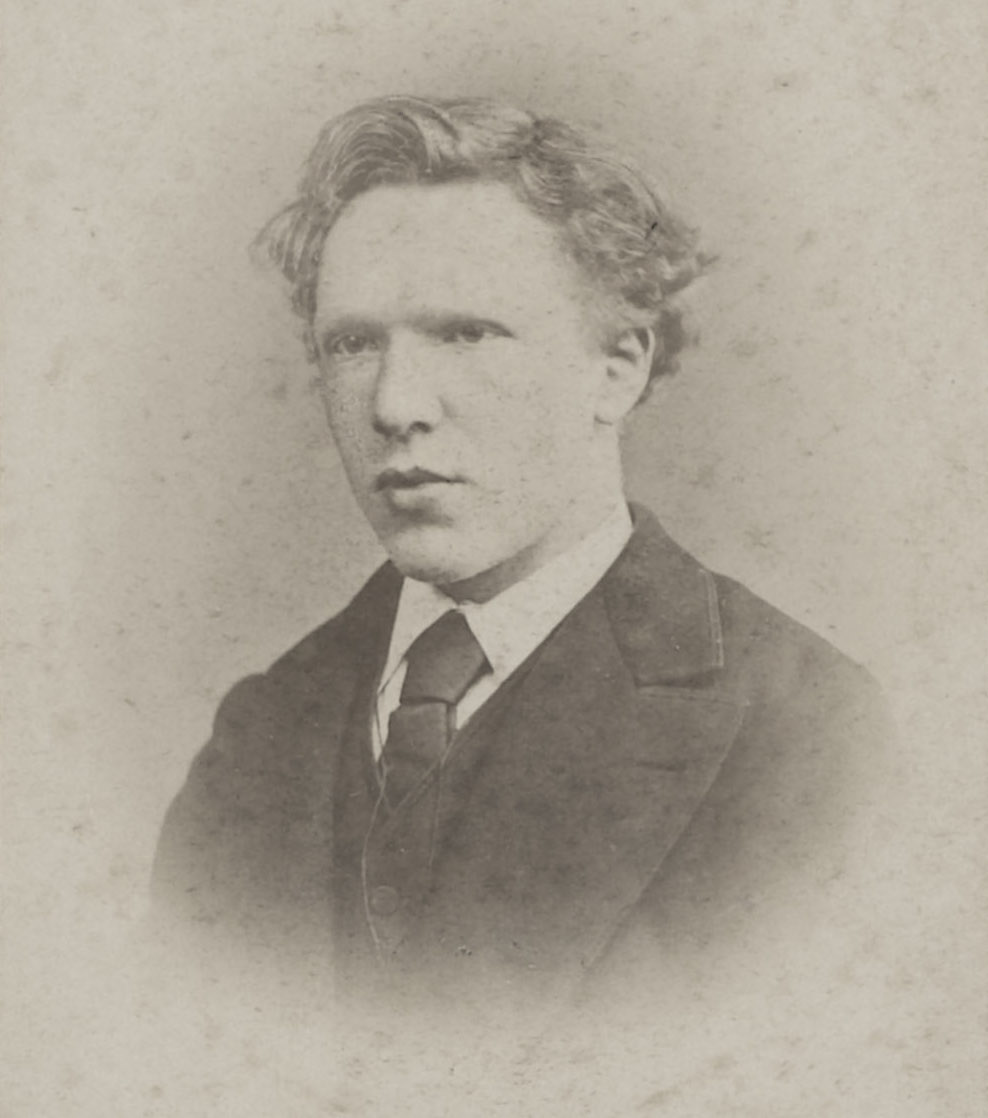
Vincent van Gogh in 1873
The couple who had inherited the painting, from a relative who had emigrated from Switzerland after the start of World War II, merely laughed at Khun's suggestion. However, the painting was sent to Amsterdam to be examined and the Rijksmuseum confirmed the work as being an original Van Gogh and called the painting "Still Life With Flowers".

At auction, the artwork inspired lively bidding and sold for a record $1.43 million. This is pretty sad when you consider that Van Gogh only sold one painting during his life.

Gold Bars and Ingots

A man inherited a house from a relative in the town of Evreux in Normandy, France and discovered 100kg of gold coins, bars and ingots, which had been hidden about the house. Such as, under the laundry, in cupboards, under chairs, in glass jars, in fact, all over the place. The man sold the lot for $3.7 million, but he will have to pay a 45% inheritance tax on the gold, and probably, three years of back taxes.

Anglo-Saxon Treasures

Hoard of Angl-Saxon rings
A man and his son were digging a hole for a fence post at their home in Acomb, Yorkshire, when they noticed something green almost covered by the dirt. Digging the article up, they soon found that they were holding a copper pot, which had turned green from the soil moisture. And inside that pot, was a collection of Anglo-Saxon jewellery, featuring gold filigree and precious stones like garnets, which were 1400 years old.

The man and his son soon found out that the Treasure Act 1996 stipulates that the finder must offer the item for sale to a museum, at a price set by an independent board of antiquities expert, known as the Treasure Valuation Committee. The treasure was valued at under £3,000 ($3,800).

Mark Twain's Original Manuscript

In October 1990, Barbara Testa opened some steamer trucks which she had inherited in I961 from her grandfather, James Fraser Gluck, a Buffalo, New York, lawyer, who died in 1895. In one of the trunks she found the missing half of Mark Twain's "Huckleberry Finn" manuscript.

Gluck gave the 685-page manuscript to the Buffalo and Erie County Public Library many years before, according to Testa and how he still had this manuscript in his possessions, when he died, is a mystery.

1938 Superman Comic in Wall of his new Home

A guy named David Gonzalez bought an abandoned house in Elbow Lake, Minnesota, which he planned to fix-up and sell. However, he made a bigger profit than he imagined, after he found a copy of Action Comics Number One, from 1938, featuring the first appearance of Superman, in the walls of his home. In 2013, the comic book sold for $175000.