Losing Your Sight. But You See Things


It is very strange how some people who are losing their eye-sight can experience complex visual hallucinations. These hallucinations, called visual release hallucinations, which happen to a person with partial or severe blindness, usually feature characters or objects which are much smaller than normal.

These "lilliputian" hallucinations (the word coming from the famous children's story, Gulliver's Travels) were first described by Charles Bonnet in 1760, often feature faces or cartoons and animals, plants or trees and various inanimate objects.

This type of hallucination which is not connected with mental illness, cognitive impairment or dementia, can affect the young as well as older people. It is thought that these type of hallucinations are the result of the brain's hyperactive response to failing sight. 

According to the late and great Dr Oliver Sacks, Charles Bonnet syndrome images tend to be “more stereotyped than those of dreams and at the same time less intelligible, less meaningful” — they rarely yield “insights into the unconscious wishes, needs or conflicts of the person” but are instead the brain reacting to the loss of eyesight.
It is the deprivation of input which causes the brain to create its own input to replace what has suddenly disappeared. And although a person experiencing these strange and sometimes exotic hallucinations may be shocked and surprised by what they see, they know that what they are experiencing is not real. 

However, suffering from Charles Bonnet hallucinations can make life very difficult for some people, as the streets or rooms around the person may appear distorted. What appear to be walls or fences may suddenly appear in the path and this can be unsettling or frightening. 

The Neurologist V.S. Ramachandran wrote about the American author and cartoonist James Thurber, who likely had Charles Bonnet Syndrome, after becoming visually impaired from an accident in his childhood. In writing to his doctor Thurber described seeing "golden sparks, melting purple blobs, and saffron and light blue waves" and other more graphic hallucinations, like seeing an old woman with a grey parasol walk right through the side of a truck.

Other people have reported seeing cartoon characters dancing on the desk, a civil war soldier in the living room and a zebra walking down the street. All of which proves that, sometimes, seeing is not believing.

Maddened By Extreme Beauty


Stendhal syndrome, which is named after the writer known as Stendhal, is a psychosomatic medical condition which is specific to the city of Florence.

It was on one of Stendhal's visits to Italy in 1817, that he experienced rapid heartbeat, dizziness, fainting and confusion, whilst viewing Volterrano’s fresco of the Sibyls, at the Basilica of Santa Croce. He later wrote, "I was already in a kind of ecstasy.........contemplating sublime beauty, I saw it close-up — I touched it, so to speak". He also said that he felt "close to heaven”.
Time clips the Wings of the Fame by Volterrano
Stendhal syndrome was described by the Florentine psychiatrist, Dr Graziella Magherina, after treating many patients with similar symptoms. Magherini wrote a book, La Sindrome di Stendhal, based on 106 case studies, of patients who exhibited certain clinical symptoms.

There are risk factors that predispose certain people to experiencing Stendhal syndrome, while contemplating works of art. These include educational level, marital status, age, and stress from travelling. Living alone, reaching the end of a journey and a religious upbringing, are also major risk factors.

Patients affected by Stendhal syndrome are so overwhelmed by beauty that they are forced to remove themselves from the emotional art experience. Similar symptoms have also been described by people who have visited other cities, like “Paris syndrome”, described in 1986 by Japanese psychiatrist Hiroaki Ota. Although, this syndrome is somewhat different, as it mostly relates to Japanese tourists who are disappointed when Paris does not live up to their romantic expectations. Paris syndrome may also include psychiatric symptoms ranging from hallucinations, both visual and auditory, to paranoid persecutory delusions.
Maxpixel
Jerusalem Syndrome which mostly affects Christians can be triggered by a visit to the city of Jerusalem. In this disorder, the patient may become so affected by the religious significance of the place, that they may develop a “unique acute psychotic disorder.” This disorder, described by Dr Bar-El, causes the afflicted tourists to believe that they are characters from the Bible. Often the traveller will become very confused and believe that they themselves are the Messiah or redeemer.

Another controversial form of psychosis is "India Syndrome", which mostly affects Westerners. The French psychologist Régis Airault, who coined the term, “India Syndrome”, says, it is a form of “bouffée délirante” — short-term psychosis. Patients would claim that they heard the voice of Indian deities and they would attempt to swim back to Europe. Others might believe that they were the reincarnation of Adolf Hitler. The Privat Hospital in New Delhi admits about a hundred delusional Westerners a year, many of whom had been practising yoga around the clock.

She Was The mother of Adolf Hitler

Adolf Hitler's Mother, Klara Hitler

Klara Hitler (née Pölzl) who had a peasant background, was born in the small Austrian village of Spital. She was the eldest of only three children who survived childhood, out of eleven children.

In later years, Klara was described by the family doctor as being a very quiet, sweet, and affectionate woman. Yet somehow, Klara managed to give birth to one of the most murderous and deranged dictators that ever walked this planet. 
Klara Hitler, circa 1880s
As a devout Roman Catholic, Klara was a regular church attendee with her children, including Adolf. However, of the six children born to her, only Adolf and his younger sister Paula survived to adulthood.
It was in the year 1876 that Klara left her family's farm to begin work as a servant at the home of her second cousin, Alois Hitler, whose original surname was Schicklgruber; his name was changed to a variant spelling of his stepfather' Johann Hiedler.

Klara's cousin, Alois Hitler, was married to a well-off woman who was fourteen years his senior; she was in poor health and without children. However, Alois was soon engaged in an affair with, household servant Franziska Matzelberger, in 1877.
Portrait photograph of Alois Hitler née Schicklgruber
Franziska saw the young Klara as a rival and insisted that she leave the house. Franziska gave birth to a child named Alois, in 1882 and became Mrs Hilter after Anna Hitler died in 1883. Two months after being married, Franziska gave birth to daughter, Angela. Soon, however, Franziska was ill with tuberculosis and Klara was invited back to care for the children.

Franziska died in August 1884 and Klara and her second cousin Alois Hitler, married on 7th January 1885. Although, they had to obtain a special permit because they were cousins.

From various accounts, it appears that Adolf Hitler had a very close relationship with his mother. He later told Joseph Goebbels that his mother was "a source of goodness and love" whereas his father was "a tyrant in the home".

Adolf's sister, Paula, also said their mother was "a very soft and tender person, the compensatory element between the almost too harsh father and the very lively children who were perhaps somewhat difficult to train. If there were ever quarrels or differences of opinion between my parents it was always on account of the children. It was especially my brother Adolf who challenged my father to extreme harshness and who got his sound thrashings every day. How often, on the other hand, did my mother caress him and try to obtain with her kindness what her father could not succeed in obtaining with harshness!"

In 1907 Klara was diagnosed with breast cancer. She underwent a mastectomy and an experimental form of chemotherapy, called iodoform, which poisoned her. She died on 21 December 1907. Adolf Hitler. the man who authorised the "euthanasia" program, which was the systematic killing of those Germans that the Nazis deemed "unworthy of life." said that his mother's death was a "dreadful blow."

Magical Protections For Warfare and Life

Many, if not all societies have had supernatural belief systems, which provide individuals with existential meaning and a sense of purpose. Many of these beliefs are probably incorrect, but believe it or not, the belief in protection from spells during warfare, though often detrimental to the individual, is generally beneficial to society as a whole, bringing groups together and helping them to survive.

Magical Warfare Technologies


Since the 1990s, the Democratic Republic of the Congo has experienced extreme levels of violence and political turmoil. High levels of displacement, disease and poverty exist here. There is also little in the way of governmental support or direction to provide help. This leaves the people of the Congo in a precarious position with high levels of existential angst. This is where supernatural beliefs come in. 

The Congolese, in general, have a high level of belief in the supernatural. They believe that unseen forces and agents inhabit the world. An example of this is the magical ritual of bulletproofing, 
The Mai-Mai guerrillas of the Congo would charge into battle naked with the belief that they were bulletproof. Such beliefs are not that unusual. A former commander of forces and member of the Sarpo tribe in Liberia, who was often referred to by the name, General Butt Naked, would lead his troops into battle, naked, except for shoes and a gun. He believed the nakedness was a source of protection from bullets. He also believed in increasing his powers by cannibalism, until he converted to Christianity. 

The rituals to make a person bulletproof vary, ranging from not drinking water, no sexual acts with a woman during her period and not eating zucchinis. Failure of the bulletproofing, such as death, would often be attributed to the failure to carry out the conditions of the ritual. Death and injury did not prove the belief system to be false.

Magical Tattoos


In Thailand, the tradition of sak yant tattooing goes back thousands of years. These yantra tattoos are believed to be magic and to bestow mystical powers, protection, or good luck. Of note, “Sak” means “tattoo,” and “yant” comes from yantra, a mystical diagram found throughout Dharmic religions.

People receiving these sacred tattoos believe that the drawings on their skin are magically charged and will bring many benefits. There is a range of protections and benefits which are believed to be provided by the tattoos, from protection to the bearer, attracting romantic partners and shielding the wearer from bullets and other weapons. 
Tattooing Yant at Wat Bang Phra Temple
The designs of the sak yant tattoos are derived from Buddhist and animist imagery, but each person receives tattoos that are suitable for his/her purposes and place in the world. Celebrities like Angelina Jolie and Steven Seagal and other foreigners have had sak yant tattoos inked upon their skins and this has upset the Thai people and led to the installation of 15-metre-wide billboards near Bangkok's Suvarnabhumi Airport declaring that: "It's wrong to use Buddha as a decoration or tattoo".

Tribal Cannibalism and Tradition


Throughout the Pacific region, there has been a culture and tradition of tribal warfare for hundreds and sometimes, thousands of years. Although many of these preindustrial societies had institutions which were aimed at taming violence, such as the use of duels, enforced migration and compensation; as circumstances changed and populations grew, these often failed. In more recent years, Western justice systems have tried to stop the cycles of violence and revenge, called "payback" in pidgin English, by bringing fighting and the dispensation of justice into the courtroom. 

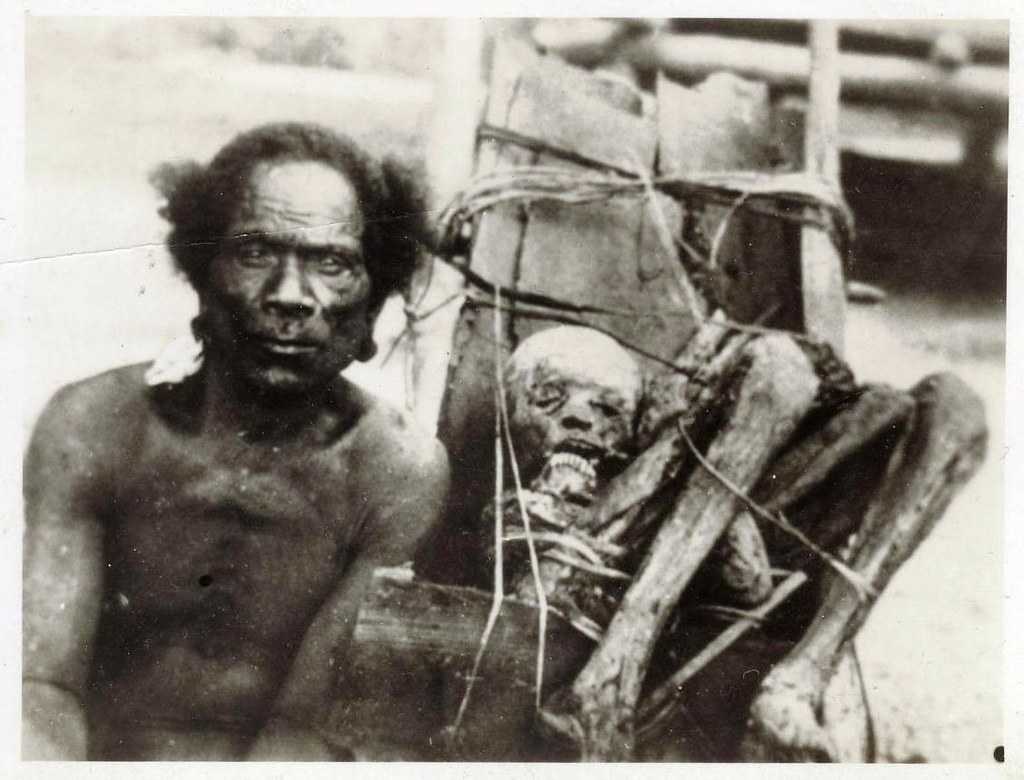
Back in the 1970s, Papua New Guinea was an Australian‐administered territory. However, at this time, there were still many "undiscovered" and uncontacted tribes living in New Guinea, particularly in the Highlands region. Some of these tribes were found to be eating the bodies of their enemies and keeping the mummified remains of their own dead tied to tree platforms in a sitting position. Other tribes would display skulls won in battle.
New Guinea native posing with a mummified body - WW2 era
New Guinea native posing with a mummified body - WW2 era. Aussie Mobs
Some tribes practised cannibalism, so that they could obtain a witch's powers and prevent these powers from being used by others.  Some routinely cut off the heads of the rivals tribe and poured the blood over a special stone, then later drank brain soup. This was just part of the everyday tribal warfare. 

Books To Read

Why People Believe Weird Things: Pseudoscience, Superstition, and Other Confusions of Our Time, by science writer Michael Shermer.

Plants Communicate and Feel Pain


It appears from research that plants have intelligence, as they can solve problems and learn from experience. In the book, The Hidden Life of Trees: What they Feel, How they Communicate—Discoveries from a Secret World, by Peter Wohlleben, these claims are supported by authoritative scientific publications.

Trees, it seems, are not isolated individuals. They actually live in communities with complex ecological relationships. These relationships are with organisms of the same species and with organisms of different species, and especially, with the soil fungi, which assist in the transmission of nutrients to plant roots.

Trees of the same species are almost tribal, but they will form alliances with trees of other species to communicate collaboratively through a network, which some have called, the Wood Wide Web. Through this network, trees send chemical, hormonal and slow-pulsing electrical signals, which scientists are just beginning to understand.

According to Jack C Schultz, a professor in the Division of Plant Sciences at the University of Missouri in Columbia, plants "are just very slow animals." He also says that plants move with purpose. They hunt for food, compete for territory, circumvent predators and some even trap prey.
Tree canopies often stop expanding when they touch the canopies of the trees around them, this is because of “Canopy shyness”. However, some trees only do this with trees from the same species. The Australian botanist, Maxwell Ralph Jacobs, noticed canopy shyness in eucalyptus in the 1950s. It seems that such trees are collaborating, so that all the tree canopies can receive light.

Some decades ago, scientists noticed on the African savannah, that giraffes would move on minutes after feeding on umbrella thorn acacias. These acacias, in response to the nibbling of the giraffes, would produce a toxic substance (ethylene) in their leaves. These trees would also send airborne scents to signal other trees in the vicinity, which would also begin to produce the toxic substance to deter the giraffes from eating their leaves.
Also, according to Peter Wohlleben, beeches, spruce, and oaks all register pain as soon as some creature starts nibbling on them. When a caterpillar takes a bite out of a leaf, the tissue around the site of the damage changes. In addition, the leaf tissue sends out electrical signals, just as human tissue does when hurt. However, the signal is not transmitted in milliseconds, as human signals are; instead, the plant signal travels at the slow speed of a third of an inch per minute.

Trees in cities are often stressed and have much shorter lives. Many experience sleep deprivation, with the constant light sources they experience. According to Daniel Chamovitz of Tel Aviv University in Israel, many plants have other similarities to humans, too, in the way plants experience the world. For example, they can distinguish between light of different colours and they are aware of aromas and of gravity and can sense which way is up or down.

Plants are much more complex than we humans have previously thought, which means that we may need to rethink our treatment and relationships with them. 

We Absorb Our Family Story

A few years ago, Alice Collins Plebuch decided to take one of those DNA tests which show your ancestry. She had always believed herself to be of Irish descent and her family fully identified as Irish-American Catholics, so she was disturbed and flummoxed when half of her DNA came back as being European Jewish, Middle Eastern and Eastern European. (read here).

And so, Alice began a journey to find out the real story of one-half of her origins.

As it turned out, to make a long story short, Alice's father Jim Collins, who had always been very religious and regarded himself as being an Irish-American, and who'd even had a Irish-style wake when he died, had been mistakenly given after his birth, to the Irish-American couple that he grew up to regard as his parents. His real parents were actually Ashkenazi Jewish-Americans. The Irish couple's own child had been given to the Jewish family and this child had been named, Phillip Benson.

Phillip Benson, like Alice's father, was born at Fordham Hospital in the Bronx and he had been brought up and married into the Jewish community. Someone it seems, mixed the children up and as the Washington Post stated, “Somehow, a Jewish child had gone home with an Irish family, and an Irish child had gone home with a Jewish family and the child who was supposed to be Philip Benson had instead become Jim Collins.”

Which just goes to show how most of us simply take on and adsorb the beliefs of our immediate family and surrounding culture, despite the origins of our DNA. 

The Parliament of Our Brain and Free Will

According to the work of neuroscience, our sense of self is simply an illusion. A trick of the brain. Whilst many of us believe we have a single integrated identity and free will, in reality, our brain is creating this hallucination.

Our brains, according to David Eagleman, a neuroscientist at the Baylor College of Medicine in Texas, are more like a "neural parliament", with different parts of the brain fighting it out in an attempt to control decisions.

Our sense of reality is constructed by the brain, by many unconscious processes and our sense of who we are is based on a story we tell ourselves, based on distorted and selective past memories.

Brains are locked inside the darkness of our skull and they depend on the information streamed by our senses. The brain then makes patterns and creates a picture of reality. But our response to this reality may not be simple. For example, I might see a delicious cheesecake in front of me and the parts of my brain which register hunger and pleasure might want it. Another part of my brain might be thinking about how I need to lose weight and that the ingredients in the cheesecake might not be good for my health. If I'm feeling particularly hungry or stressed, then the hypothalamus, an area of the brain in charge of the stress response and hunger may well prove to be dominant over the other parts urging me to control myself.
Consider also how a bottle of hand sanitizer can cause most of us to become more conservative. In general, conservatives have a stronger disgust reaction. According to research in the journal Psychological Science, reminders of cleanliness changes peoples social attitudes. Simply placing a bottle of hand sanitizer next to people answering a questionnaire causes respondents to answer more conservatively.  


Books To Read

The Righteous Mind: Why Good People are Divided by Politics and Religion, is a social psychology book by Jonathan Haidt, in which the author describes human morality as it relates to politics and religion.

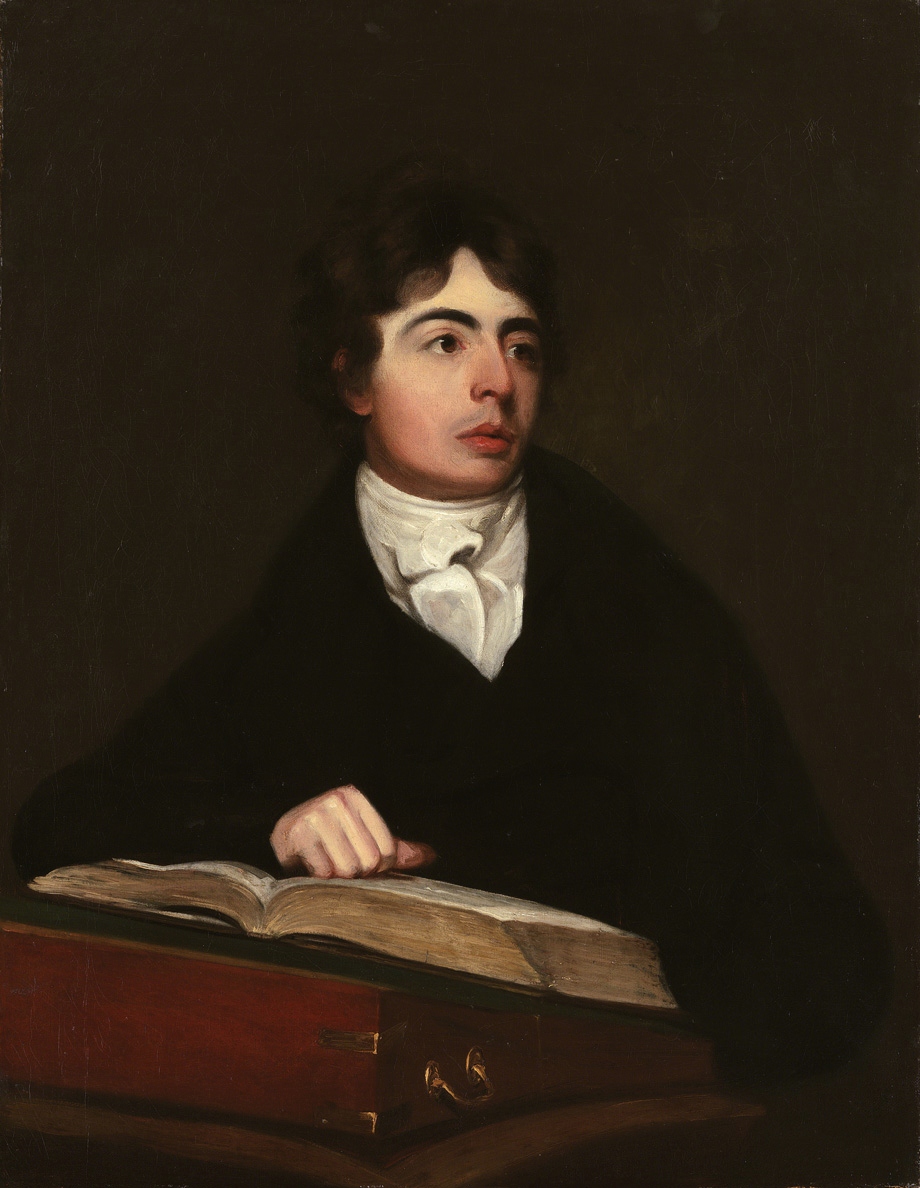
Poetical Egalitarians: Coleridge and Southey

The renown British poets, Samuel Taylor Coleridge and Robert Southey, in 1794, came up with a plan to create a utopian egalitarian community based on two principles: "Pantisocracy" (meaning government by all) and "Aspheterism" (meaning general ownership of property). The foundation of their idea came from from Plato's ideal commonwealth.

In this new society, the two men wanted to eliminate servitude and oppression. Integral to this vision was the precept of no personal property so that people would be governed by the “dictates of rational benevolence.”

Initially, Coleridge and Southey planned to build the community on the banks of the Susquehanna River in the United States; then later, the idea of establishing a less ambitious community in Wales was put forward.

However, as neither Coleridge or Southey had much money with which to build their utopia, they had hopes that wealthier immigrants who would join the community, would be willing to finance it.

Pantisocracy as dreamt of by Coleridge and Southey, never came about, as the plans were scuttled by financial difficulties and the loss of interest in the idea by potential community citizens.
Samuel Taylor Coleridge
Robert Southey

63 Light Years Away: It Rains Glass

The planet called HD 189733b is a beautiful azure blue. But this planet is 63 light years away and the atmosphere is a scorching 1,000C. And it rains glass there.....but, sideways, mind you, because of the 7,000km-per-hour winds. So it's not exactly a relaxing scene, even if you could get there.
This huge gas giant is located 600 trillion kilometres from Earth, but its environment would not be compatible with life, with its extremely hot glass rain and scorching temperatures. So essentially, it's a right deadly place.

Located in the constellation Vulpecula in the northern sky - also known as the little fox, this planet, like Earth, looks blue and for similar reasons. However, while Earth looks blue because the blue spectrum of the Sun's light is scattered about by air molecules, on this planet, the glassy silicate particles scatter the blue light spectrum.

Look Left and Right

Conservatives are often called right-wing and liberals left-wing and these different groups tend to see the world differently and to form political sects which disparage and despise each other. But we would be better served if we got out of our echo chambers and started to listen to each other. Here's why:

As Winston Churchill said, democracy is the worst form of government, except for all the others that have been tried. So if we concede that while the democratic system is a slow-moving beast, it is also a system which allows its citizens to express their opinions about the country and how it is being run. This is the public sphere and the discussion and debate which goes on here should help us to identify potential societal problems, work through issues and come to a workable compromise.

Now, take a contentious and explosive matter like immigration, which for many wealthy and successful western democracies, is a salient and fraught matter. Left-wingers will tend to emphasise issues like human rights and the belief that all lives are equally valuable. These, are undoubtedly important and weighty considerations.

Right-wingers, however, are often concerned by how our society will change with immigration and this is very important too. For example, some ethnic and religious groups may have a lot of children, and so, after a number of years, some particular groups of people may have the numbers and the ability to affect political policy toward certain directions. This may matter or it may not. But we need to listen closely to all voices and not just dismiss those that we see as the opposition.

Also highly relevant here is the importance of free speech in a democracy and the recognition that your right to free speech is always constrained by the rights of others, as other people also have the right not to endure vilification, hate and harm. And genuinely embracing free speech doesn't mean that you only support the concept when the speech happens to coincide with your point of view.
For example, in Australia, the left tends to respond in outrage when limits to immigration may be mentioned, and so, interesting and important arguments about the population carrying capacity of the land and the planet are also shut down. The left often wants to talk about the environment but with critical exclusions. How the changing ethnic and religious make-up of the country may modify what we value about our country, also, shouldn't be shut down and crushed. These matters are important to us all and we should take care not to stymie and stunt the discussion.

Australia's right-wing is also guilty of the same blinkered views and obstructions; like when a certain journalist was sacked after an intensive campaign from the right-wing, who were outraged about his "offensive" comments about Anzac Day. The interesting thing, however, is that many academic historians would agree with that SBS journalist's views, as they fitted the facts and evidence. But Anzac Day has become like a religion on the right in Australia and any criticism is seen as blasphemy. The real historical story is covered up and kept like a simple fairy tale and whilst this feeds the monster of nationalism, it also dumbs us down as a nation.

One other thing to mention is that breaking down the wall of our information and group silos does not mean that we simply become centrists, as this way of thinking is too simple and it's based on the fallacy called argumentum ad temperantiam, where you take the middle ground, or a false compromise. What you need to do is listen to the discussion and learn as much as you can. And each issue should be judged on its merits.

So whilst your right or left wing echo-chamber may be comfortable and reassuring, it is also stunting your brain and destroying democracy. 


Hitler Was on Drugs

Adolf Hitler the leader of the Nazi Party from 1933 to 1945, is known for bringing about WW11 and for his genocide of the Jewish people. Hitler, however, in the beginning at least, had a desire to become an artist; his paintings are rather good, and he was a practising vegetarian.
Mother Mary with the Holy Child Jesus Christ, 1913, Adolf Hitler
There are reports that Hitler became a vegetarian because of concerns for animal cruelty. Although he may have been inspired by other reasons too, it is hard to square the idea of Hitler as caring about the abuse of animals, with the murderous dictator that he became. A 1937 article in The New York Times, also noted that Hitler didn't drink or smoke and that he avoided any kind of meat.

Things changed. Hitler went from a person who would try to dissuade others from eating meat by telling them graphic accounts about how animals are killed, to a person who was addicted to drugs, such as amphetamine, barbiturates, opiates, and cocaine and injected animal hormones.

The German writer Norman Ohler reveals the astonishing tale of drug use by Hitler and the Third Reich and how the Nazi armies carried out the "Blitzkrieg" invasions of Poland and France while high on, Pervitin, which was basically crystal meth.

It was Hitler's personal physician, Dr Morell, who would inject Hitler with an opiate drug, which is very close to heroin (now called oxycodone), three times a day and prescribed him high-grade cocaine to be taken twice a day. But the drug producing factories were bombed and the drug supplies began to run out. Whether the drooling, stumbling and crazy acting Hitler was suffering from Parkinson’s disease or in withdrawal, or both, at the war's end, before his suicide, we cannot be certain.

And all this when we thought that the Nazi's couldn't get any more sinister and despicable.


Books To Read

Blitzed: Drugs in Nazi Germany, by Norman Ohler

Free Vegies and Fertilizer

If you are are a frugal and thrifty type you will love the following suggestions:

Grow Bok Choy or Celery from Scraps


If the bok choy in your fridge has some yellowed leaves at the bottom, don't throw it away, because it's ready to grow. First, cut the stems of the vegetable where the stems meet the leaves. Or in other words, 2 inches from the bottom up. Use the good leaves in your cooking.

Take the bottom of the bok choy and put it into a bowl with at least 2cm of water. The part where the leaves used to be should be facing up.

Place the container with the bok choy in direct sunlight and then, simply change the water in the container every day.

After some days roots should appear, and then, you can plant your bok choy in a pot or in the ground. Cover the roots well and water the plant whenever the soil becomes dry.

As the plant grows you can cut leaves from the outside and the plant will continue growing and producing.

Carrot Tops For Salad Greens

Place carrot tops in a bowl with water and put them in a well-lit room. After the green tops grow you can cut them off and use in salad or cooking.

Other vegetables which can be grown from scraps are Cos lettuce and cabbage which can grow roots if the bottom is placed in a bowl of water. After roots appear, plant in a pot or in the ground.

Fertilising with human urine

There is no need to purchase costly fertilizers for your plants as you can use your own urine. And importantly, fresh human urine is sterile and bacteria free. Our urine contains Nitrogen (N), Phosphorous (P), and Potassium (K) and other trace micro-nutrients.

After you collect your urine add some water, about 5 times as much water as urine. Then simply apply the liquid to the soil around the plant.

No more chemical fertilizers!

The Jesus Triumvirate

Milton Rokeach was a social psychologist who published a book in 1964, about the experiment he conducted on a group of three patients with paranoid schizophrenia, at Ypsilanti State Hospital, in Michigan USA.
by Caravaggio
Whilst working at the psychiatric facility, Rokeach found that three male patients, all with paranoid schizophrenia, all believed that they were Jesus Christ. So Rokeach brought the men together, forcing them to confront their conflicting claims.

At first, the three men fought with each other, with one man claiming that, "You oughta worship me" and another countering "I will not worship you!" and the third insisting "....I am the Good Lord".

The three men continued over time to debate, argue and fight, but only one of them slightly capitulated and asked to be called a different name, in this case, "Dr Righteous Idealed Dung".

Despite Rokeach manipulating these patients and their delusions in various ways, in an attempt to get them to change their beliefs, the patients' continued to strongly believe in their delusions. As explanations for the existence of two other people claiming to be Jesus, they variously claimed that the others were "crazy" or "duped"; had a mental disability, were dead and being operated by machines.

At the end of the 1984 edition of the book, Milton Rokeach wrote, "I really had no right, even in the name of science, to play God and interfere round the clock with their daily lives".

Henry Ford's Unhappy Jungle City

Henry Ford is famous for selling millions of cars, especially the affordable Model T produced by assembly line manufacturing. He paid his workers well and he helped create a middle class in America.
Henry Ford on the cover of Time magazine, January 14, 1935
 As a highly successful man of business, Henry Ford's name demands a great deal of respect, but Ford had some crazy ideas too, like creating a prefabricated, industrial town in the Amazon Rainforest, called Fordlândia.

After negotiating a special deal with the Brazilian government in 1928,  Henry Ford began to steam ahead with the creation of the world’s largest rubber plantation, set deep in the Amazon forest.

The motivation behind Henry Ford's Amazon industrial town, was an attempt to undercut Asian rubber growers, who had a monopoly on producing rubber and who drove the prices sky-high. So Ford spent a truckload of money (excuse the pun) and built houses, relocated workers and employed indigenous people to work at Fordlândia. But few of his plans worked out as he hoped.

Ford didn't consult a specialist about growing the rubber trees and most of the trees died from blight Then he spent a heap of money building swimming pools, tennis courts, and shops for his workers, but he soon faced malaria, riots and cultural clashes.

Ford was a control-freak. He expected his workers to work hard, long hours in the relentless jungle heat. And then, he tried to impose a kind of "cultural imperialism" on these workers during their time off. They had to eat at the canteen, which only served bland food, which the workers had to pay for.
Ruins of Fordlândia, circa 2005.
For entertainment, Ford provided English only singing performances and compulsory square dances, at which alcohol was banned. In trying to bend the jungle to his will and forcibly shape his workers free time and culture, Ford was not successful. His rubber plants died and his workers were unhappy and rioted.
The main warehouse at Fordlandia
After losing $20 million on his Amazon venture (over $200 million in today's dollars) Ford sold Fordlândia for $250,000. Today Fordlândia lays crumbling into ruins and deserted in the Amazon jungle.

Frankenstein, Anarchism and Free Love

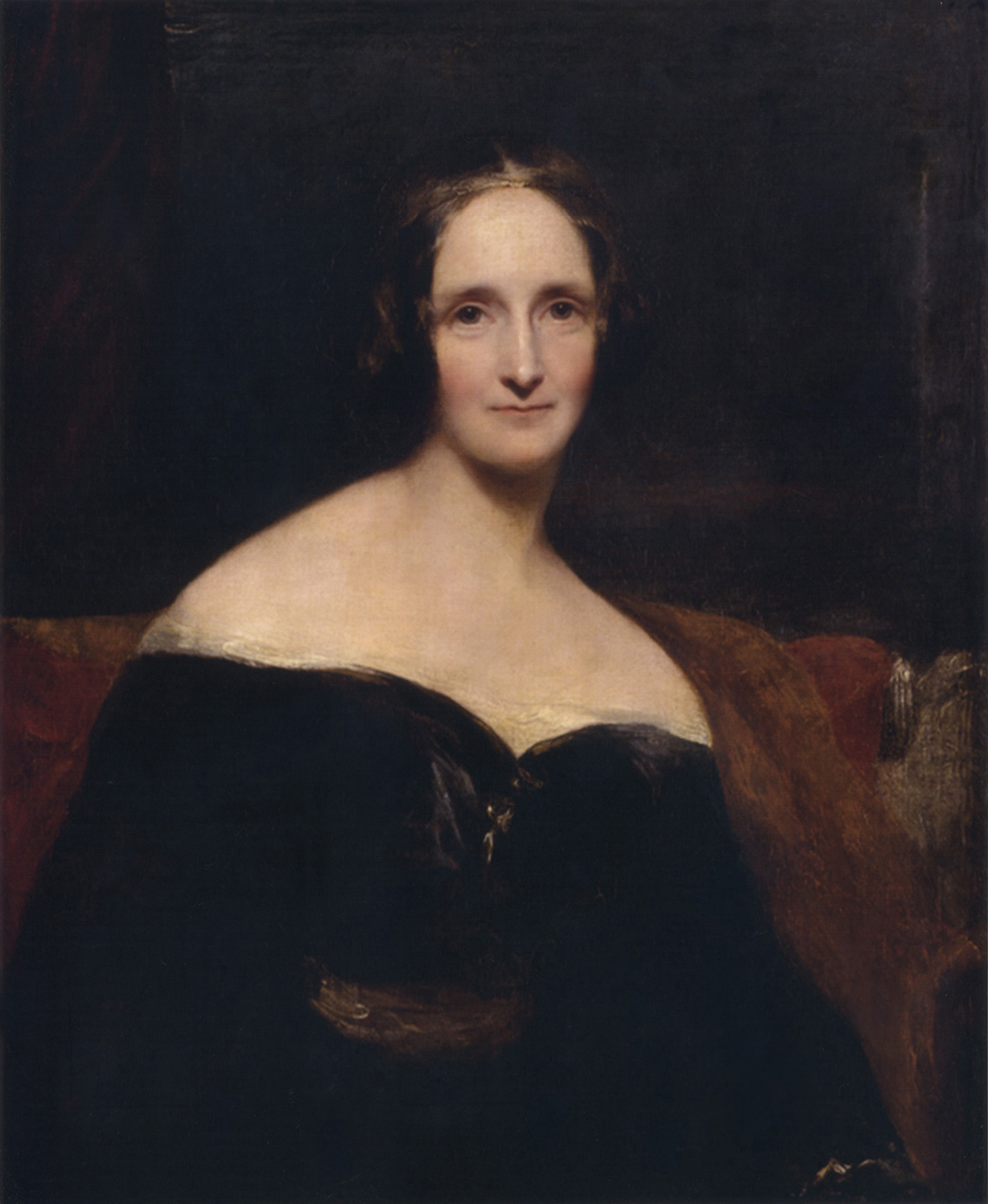
Mary Wollstonecraft Shelley (1797-1851), the author of the gothic, horror novel Frankenstein, or the Modern Prometheus (1818), was the daughter of radical, celebrated and interesting parents.
Mary Shelley
Mary's mother was the philosopher and feminist, Mary Wollstonecraft, who wrote A Vindication of the Rights of Woman (1792). A book which argued that women were not inferior to men; that they only needed educational opportunities.
Mary Wollstonecraft
Wollstonecraft objected to the way that society demanded that girls be brought up, as empty-headed flirts, who were only interested in trivialities; she believed this was morally depraved. She saw women as being trapped by their lack of serious education and training, in a life that was all about appearances.

Mary's mother, also, did not believe in marriage, which was a fairly scandalous notion in 1793, when at age 34, she fell in love with an American named Gilbert Imlay, whom she'd met during the French Revolution. Wollstonecraft became pregnant and gave birth to a girl named, Fanny. However, when the child was 4 months old, Gilbert left on a business trip and never came back.

Sadly, after her death, Wollstonecraft's very important and groundbreaking ideas were overshadowed by her reputation as a fallen woman.
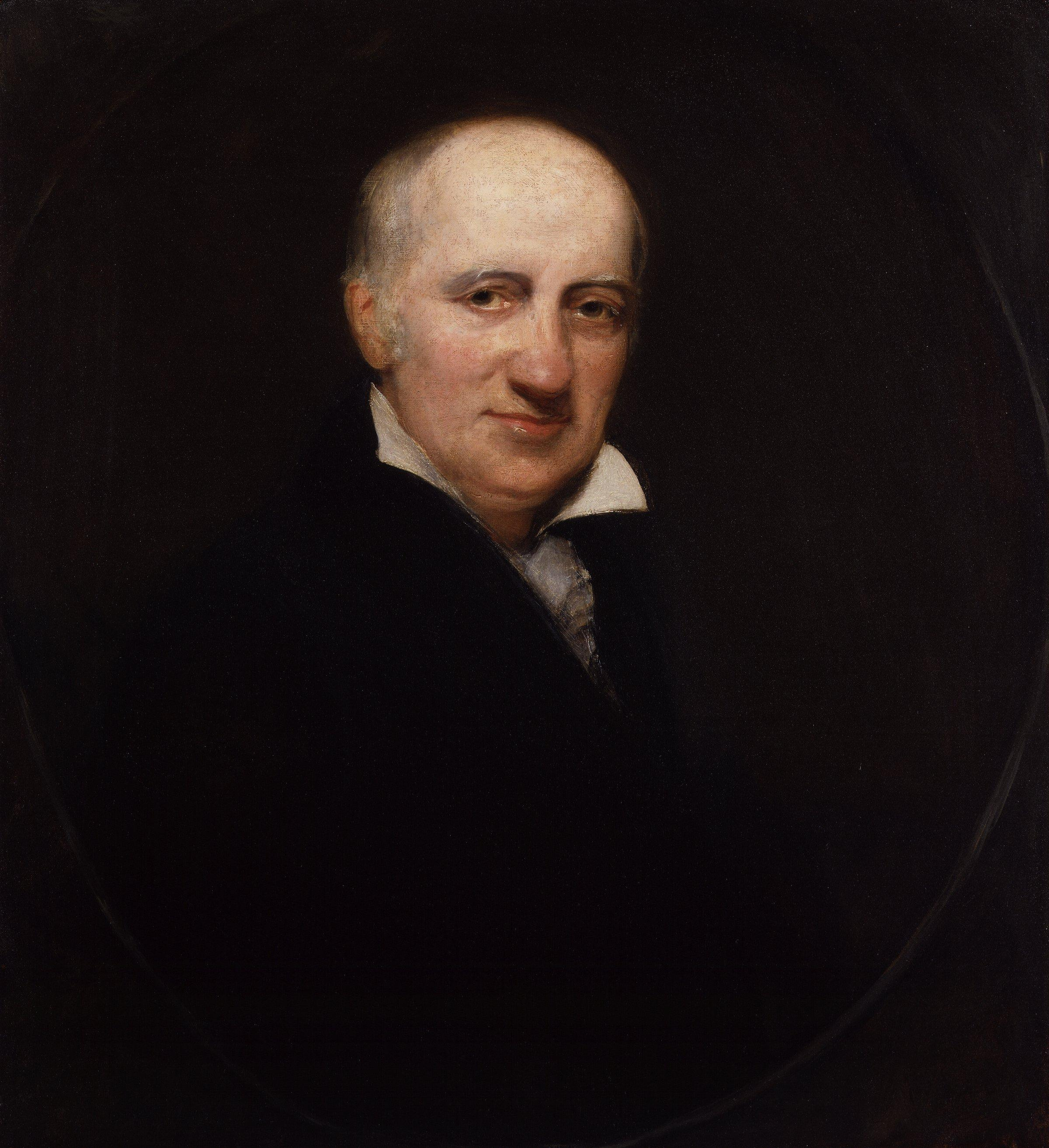
William Godwin
Mary's father was also an important philosopher named William Godwin. He was one of the founders of the still highly relevant philosophy of Utilitarianism and a supporter of Anarchism. Godwin, like Wollstonecraft, believed that marriage was "an affair of property" and an act of tyranny and degradation. Mary's parents, however, did go against their own beliefs, as they did marry, as they did not want to harm the future prospects of their daughter.

Going against their principals went to waste for Mary's parents, as later, while still a teenager, Mary eloped with the already married Romantic poet and philosopher, Percy Bysshe Shelley. But she did marry Shelley and she went on to write the hugely important and thought-provoking novel, Frankenstein.


Books To Read

Frankenstein; or, The Modern Prometheus is a novel written by English author Mary Shelley.

The Vegetarian Festival of Blood. Warning!

In Thailand, an interesting and yet gruesome, vegetarian, nine-day Taoist celebration is held beginning on the eve of 9th lunar month of the Chinese calendar.  The festival begins, near various waterways, with an invitation to the Nine Emperor Gods to come into the temple where they are to be worshipped for nine days. Devotees of the religion also believe that from their worship of these gods, they will gain wealth and longevity.
Worshippers at the Nine Emperor Gods Festival in Thailand, perform lion and dragon dances as they make their way to the water. Those following, are dressed in white and carrying sedan chairs, with statues of the gods and the sacred urn, which they sway about to symbolise the presence of divine forces.
It is traditional in Thailand to eat vegetarian meals and to recite prayers. Some devotees, however, also perform ritualised mutilation upon themselves and others, which involves such actions as impaling knives or other implements through cheeks, arms, face, legs, back etc.; partial skinning (the skin is not removed, just cut and flipped over); slashing of limbs, chest, stomach and especially tongue with swords, axes and knives; bloodletting; removal of tissue (normally limited to cysts) and intentionally wrapping or standing near firecrackers as they are lit.

The gods are sent back to heaven on the 9th day.


Books To Read

Why People Believe Weird Things: Pseudoscience, Superstition, and Other Confusions of Our Time, by Michael Shermer, Stephen Jay Gould (Foreword)

Surprising Treasure Finds

A Van Gogh

A retired couple living in suburban Milwaukee in 1991, USA, had a painting hanging on the wall of their home which had been in the family for about 30 years. When John Kuhn, a commercial real estate agent and part-time art prospector visited the couple, he identified the painting as looking very much like a Van Gogh.
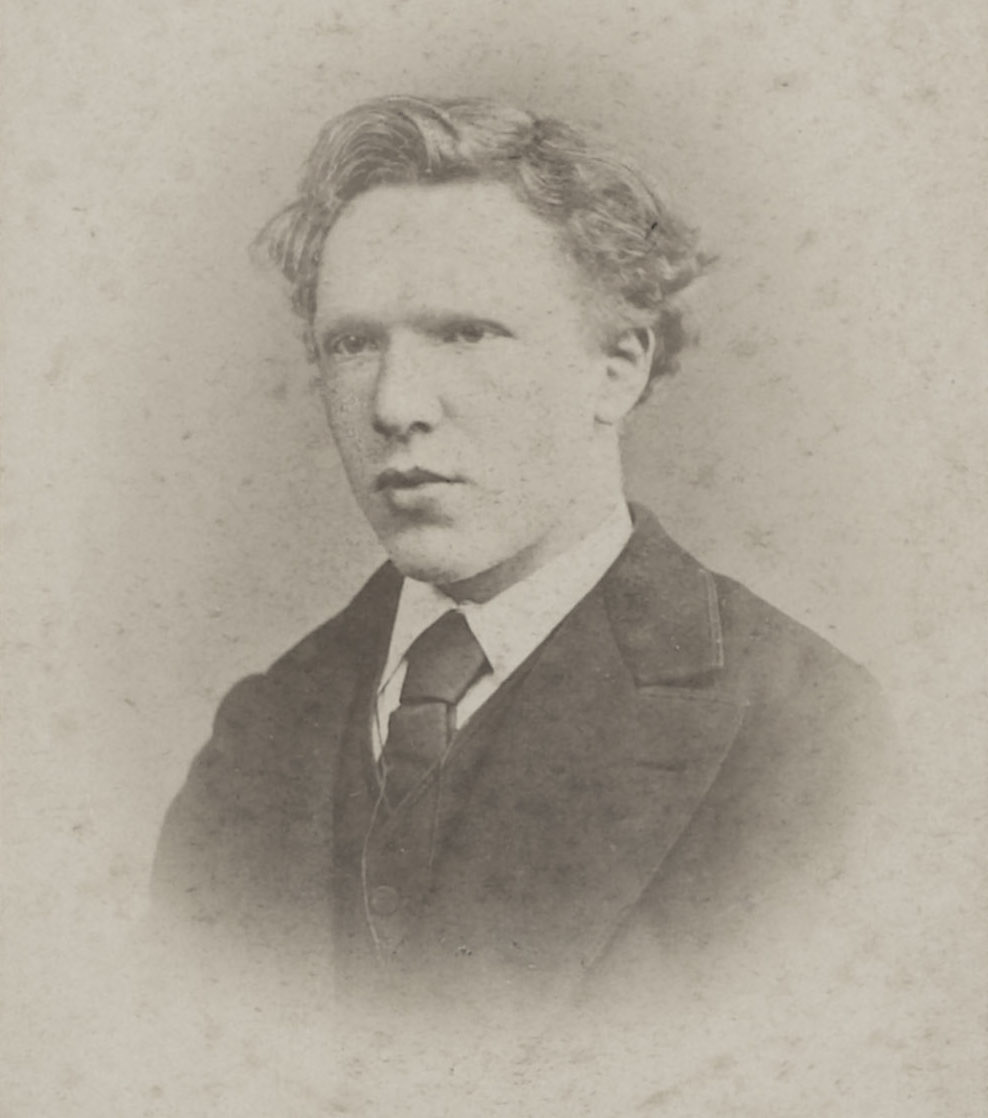
Vincent van Gogh in 1873
The couple who had inherited the painting, from a relative who had emigrated from Switzerland after the start of World War II, merely laughed at Khun's suggestion. However, the painting was sent to Amsterdam to be examined and the Rijksmuseum confirmed the work as being an original Van Gogh and called the painting "Still Life With Flowers".

At auction, the artwork inspired lively bidding and sold for a record $1.43 million. This is pretty sad when you consider that Van Gogh only sold one painting during his life.

Gold Bars and Ingots

A man inherited a house from a relative in the town of Evreux in Normandy, France and discovered 100kg of gold coins, bars and ingots, which had been hidden about the house. Such as, under the laundry, in cupboards, under chairs, in glass jars, in fact, all over the place. The man sold the lot for $3.7 million, but he will have to pay a 45% inheritance tax on the gold, and probably, three years of back taxes.

Anglo-Saxon Treasures

Hoard of Angl-Saxon rings
A man and his son were digging a hole for a fence post at their home in Acomb, Yorkshire, when they noticed something green almost covered by the dirt. Digging the article up, they soon found that they were holding a copper pot, which had turned green from the soil moisture. And inside that pot, was a collection of Anglo-Saxon jewellery, featuring gold filigree and precious stones like garnets, which were 1400 years old.

The man and his son soon found out that the Treasure Act 1996 stipulates that the finder must offer the item for sale to a museum, at a price set by an independent board of antiquities expert, known as the Treasure Valuation Committee. The treasure was valued at under £3,000 ($3,800).

Mark Twain's Original Manuscript

In October 1990, Barbara Testa opened some steamer trucks which she had inherited in I961 from her grandfather, James Fraser Gluck, a Buffalo, New York, lawyer, who died in 1895. In one of the trunks she found the missing half of Mark Twain's "Huckleberry Finn" manuscript.

Gluck gave the 685-page manuscript to the Buffalo and Erie County Public Library many years before, according to Testa and how he still had this manuscript in his possessions, when he died, is a mystery.

1938 Superman Comic in Wall of his new Home

A guy named David Gonzalez bought an abandoned house in Elbow Lake, Minnesota, which he planned to fix-up and sell. However, he made a bigger profit than he imagined, after he found a copy of Action Comics Number One, from 1938, featuring the first appearance of Superman, in the walls of his home. In 2013, the comic book sold for $175000.

Royal Wedding: Drunk and Bigamous

Before he became King George IV, George the Prince of Wales (1762 –1830) fell in love with the twice widowed, Maria Fitzherbert and they secretly married. The prince continued, however, to enjoy a luxurious and exorbitant lifestyle and he soon plunged into great debt.
George, Prince of Wales (1738-1820) 
Luckily, the truth of the prince's marriage was not known by the public, as it would have caused an immense scandal. But parliament did grant the prince £161,000 (equivalent to £18,450,000 today) to pay his debts.
Maria Anne Fitzherbert by Thomas Gainsborough, 1784
The prince continued to spend and his debts continued to escalate. Things became dire, but the prince's father, the king, would only assist his son, the prince, if he would marry his cousin, Princess Caroline of Brunswick.

And so, the wedding was duly arranged and Princess Caroline arrived so richly dressed that she could hardly walk. The prince, however, arrived for his wedding day extremely drunk. The Prince of Wales then proceeded to become even more drunk, which meant that he spent his wedding night passed-out, in front of the fireplace, on the bedroom floor. In the early morning, the Prince managed to perform his conjugal duties, with the result that a daughter was born nine months later.

As to the Prince's marriage to Maria Fitzherbert, it was declared technically illegal, because he was the heir to the throne and she was Catholic.

Burning Money For Fun

On 23 August 1994, in a boathouse on the Scottish island of Jura, Bill Drummond and Jimmy Cauty burnt £1,000,000 in cash.

The pair, who had formed an art foundation called the K Foundation, after they had retired from the music industry, decided that they wanted to do something extremely artistically subversive, so, they burned a million pounds in cash.

The money incinerating event was filmed on Super 8 by their friend Gimpo and a freelance journalist at the event wrote an article about it in The Observer.

The journalist, Jim Reid, said that at first, he felt shock and guilt about burning the money, but then, he simply became bored with the whole thing, as the money took well over an hour to burn, as Drummond and Cauty added £50 notes to the fire.
Later Drummond admitted that only about £900,000 of the money was actually burnt, as lots of the cash flew straight up the chimney. An honest islander, it was reported by the press, handed in £1,500 to the police.

The backlash, incredulity and anger that this burning of £1,000,000 provoked, showed very clearly how the destruction of money is perceived as a transgressive act by most people. According to the psychologist, Claudia Hammond, research shows that our brains respond to money as if it is a tool. This is why the burning of a load of printed paper gets people so riled up. Because we see the usefulness and potential of money and the loss of the money is a loss of potential.


Found: Lost Ancient City Under The Sea


Swallowed by the Mediterranean Sea more than 1,200 years ago, the ancient city of Heracleion has been found and now it is slowly giving up its many treasures and amazingly well-preserved artefacts.
Heracleion was a vibrant city from 6th to the 4th century BCE
Mentioned in writings by ancient Greek historians, Heracleion was a vibrant city from 6th to the 4th century BCE, but it was lost and became a place of myth and legend. 
Ptolemaic coins from the submerged Heracleion
Heracleion was, however, famous enough at one time, to be mentioned by Herodotus, the great historian of the 5th-century BCE. Since being rediscovered, Heracleion is being revealed as a place possessing buildings and art of great beauty. Such as majestic 16-foot stone sculptures and limestone sarcophagi containing the remains of mummified animals. And there are gold coins and huge stone tablets displaying ancient Greek and Egyptian scripts.
Heracleion was a vibrant city from 6th to the 4th century BCE
It is not known exactly why this place slid into the sea, but perhaps, the grand and heavy buildings were a factor, or perhaps, the earthquakes and floods were responsible. However, now, that archaeologists have uncovered Heracleion along with 64 ships and 700 anchors; religious artefacts featuring gods like Osiris and Horus and the temple where Cleopatra was inaugurated as Queen of the Nile, we have a chance to see and wonder at the magnificence of the ancient Greek world and may be, we may even learn something very exciting about the past.